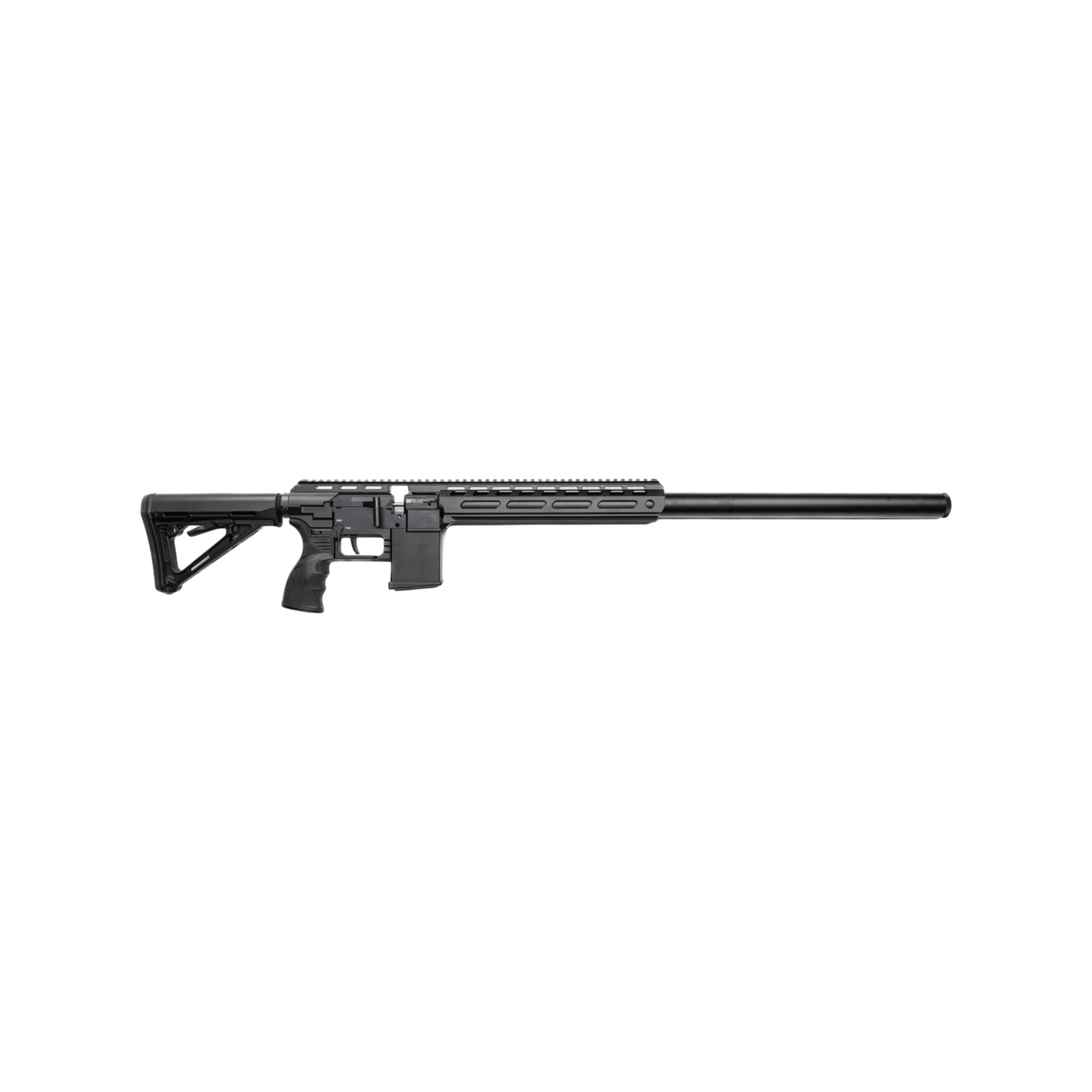


With competitive airgunning so much of the game comes down to finding a setup that balances precision and adjustability for whatever discipline you’re shooting. Over the past year I’ve been running my FX King dropped into a Saber Tactical Chassis, and it has been through just about everything I could throw at it. From the Northeast Airguns Classic all the way out to the Rocky Mountain Airgun Challenge this rig has held its own on the benchrest line, so I want to walk you through how the setup evolved and why I think it’s a real upgrade if you’re trying to squeeze more points out of every card.
Why the FX King?
For those unfamiliar, the FX King, which is part of the broader FX Dynamic family of Dynamic Block airguns, has a reputation for being an incredibly versatile airgun. Originally designed as a hunting rig with the sleek GRS stock, it’s ergonomic, lightweight, and ready to hit the woods. But as a benchrest shooter, I saw the potential to push the King even further. While the GRS stock excels in the field, it lacks some of the features that are critical for precision shooting at 100 yards, such as weight distribution and modularity.
This is where the Saber Tactical Chassis comes in. The adjustable features, modular design, and overall ergonomic approach to precision shooting had me sold before I even got my hands on it. Once the chassis arrived, the build began, and so did the long process of turning it into the benchrest rig I actually wanted to shoot every weekend.
From GRS to Saber Tactical: The Transition
Let’s start with the obvious: the Saber Tactical Chassis is designed to give you a rock solid platform for competition or hunting situations, but the clear advantage of the features is 100% competition ready. Transitioning my FX King from the GRS stock to this chassis was straightforward. The first thing I noticed was how much more robust the chassis felt. This isn’t a cosmetic upgrade either, because it’s built to take a beating and it’s probably the most robust chassis system I’ve ever tested.
The modularity of the Saber Tactical Chassis is one of its standout features. For benchrest weight is critical, because a heavier rifle means less movement from recoil and more stability. With the addition of Saber Tactical’s M-Lok weights, I’ve been able to bring my rig’s total weight up to over 20 pounds, perfect for staying rock-solid on the bench. The increased stability allowed me to eliminate some of the micro-movements that can ruin precision at long distances. Here are some of the key features that make the Saber Tactical Chassis ideal for benchrest:
-
Fully Adjustable Buttstock: The rear of the chassis offers a flat surface that’s perfect for shooting bags or monopods. The buttpad is fully adjustable for length of pull, height, and cant, allowing for a customized fit. This adjustability ensures you’re in the perfect position shot after shot.
-
Integrated Arca Rail: The built-in Arca rail on the bottom of the chassis makes mounting to a tripod or benchrest a breeze. This feature ensures a stable shooting platform, regardless of your setup. During competition, the ease of adjusting my rig on different benches using the Arca rail was a lifesaver.
-
M-Lok Accessory Mounts: The chassis includes multiple M-Lok slots, allowing for the addition of weights or other accessories to fine-tune the balance of the rifle. I personally added weights to the fore-end to achieve a perfectly balanced center of gravity, which made a noticeable difference in how tight my groups stayed.
-
Ergonomic AR-Style Grip: I’ve experimented with several grips, including the Ergo grip and Saber Tactical’s vertical grip with a thumb shelf. Having the right grip is essential for consistent trigger pulls, and the thumb shelf has become an integral part of my shooting process. It’s those little details that make a world of difference during high-pressure situations.
-
Bronze Finish: Let’s not ignore the aesthetics. The bronze finish on this chassis is stunning, adding a touch of class to the build. While performance comes first, it’s always nice when your rig looks as good as it shoots.
Performance in Competition
This setup really started at the Northeast Airguns Classic, where I decided to put the FX King to the test in its GRS stock. The King performed admirably, earning me a spot in the Finals. This experience confirmed that the King had the potential to compete at a high level, but I knew it needed more stability and more adjustability before it could really show what it was capable of.
Switching to the Saber Tactical Chassis for the rest of the competition season made all the difference. The added weight and adjustability allowed me to refine my shooting position and keep my precision consistent across multiple rounds. During the Rocky Mountain Airgun Challenge, I ran the FX King with a .30 caliber, 600mm barrel kit and a 700cc carbon fiber bottle from Utah Airguns. This setup improved the rifle’s balance by extending the bipod forward for greater stability. Every detail of the setup worked together smooth, allowing me to focus entirely on my shooting.
The Saber Tactical Chassis also played a pivotal role in helping me achieve my personal best scores during the 2024 competition season. At the Northeast Airguns Classic, I not only made the Finals but also shot some of my highest-ever scores, including a 225 on my first card. That performance earned me a sixth-place finish, my best at that event to date. Later in the season, at the Pyramyd AIR Cup, the FX King and Saber Tactical Chassis combination helped me make the Finals once again. The stability, customization, and precision of this setup allowed me to focus entirely on my shot process, leading to consistent results in some of the most challenging conditions I’ve faced.
These personal bests weren’t just numbers, they represented the culmination of months of practice, tuning, and experimentation. The Saber Tactical Chassis gave me the confidence to push my limits, and the results spoke for themselves. Whether it was battling crosswinds or mastering my mental game to stay grounded, this setup performed flawlessly, proving its worth in every competition.
Chasing Consistency on the Bench
Competitive shooting isn’t just about hitting the bullseye, it’s about doing it repeatedly under pressure. One of the key factors in my success during the 2024 season was consistency. The Saber Tactical Chassis’s ability to adapt to my needs played a major role in that. For instance, the ergonomic AR-style grip and the perfectly weighted overall shooting platform meant I could execute every shot with precision. When you’re on the line and the clock is ticking, these details matter.
At the Pyramyd AIR Cup, the weather threw everything at us: unpredictable winds, including gusts that literally blew over tents, and even a bit of rain. Despite the conditions, the FX King and Saber Tactical Chassis delivered time and time again. I remember one particularly challenging card where the wind seemed to change directions with every shot. Thanks to the stability of my setup and the tuning I’d done beforehand, I was able to make quick adjustments and stack pellets in the 9 and 10 rings. That round alone solidified my trust in this rig.
Tuning for Success
One of the most valuable lessons I’ve learned in benchrest shooting is the importance of tuning. The FX King, paired with the Saber Tactical Chassis, gives you a lot of room to work with when you’re dialing in your rifle. For instance, I’ve been using the DonnyFL Yokozuna moderator as a harmonic tuning device. By adding or removing baffle stacks, I’ve been able to find the perfect balance between velocity and precision for different environmental conditions.
At the Northeast Airguns Classic, the temperature, humidity, and barometric pressure were completely different from what I’d experienced while tuning back home in Michigan. Adjusting the moderator on-site allowed me to quickly adapt and maintain the precision needed to stay competitive.
Additionally, my process for tuning goes beyond just hardware adjustments. Before each competition, I dedicate hours to practicing under conditions similar to those I expect to face. This involves adjusting my velocity when needed, checking my scope’s zero, and even experimenting with different pellets. By the time I arrive at the event, I know my rifle inside and out, and that confidence is irreplaceable.
Lessons Learned
Benchrest shooting isn’t just about having the right equipment, it’s about mastering your process. During one of my competition rounds, I experienced an accidental discharge hitting between targets due to rushing my shot. It was a valuable reminder to slow down and focus on consistency. Since then, I’ve incorporated a thumb shelf into my shooting routine to ensure proper hand placement every time.
The community of shooters at these events has also been a source of invaluable knowledge. Conversations with competitors like Bill from Team Saber Tactical have helped me refine my approach and learn new techniques. Whether it’s discussing barrel liners, twist rates, or tuning methods, the collaborative spirit of the airgunning community is one of the things I love most about this sport.
One lesson that stands out from the 2024 season is the importance of preparation. There were times when I saw competitors struggle because they hadn’t accounted for environmental factors or hadn’t spent enough time tuning their gear. Benchrest shooting is as much a mental game as it is a physical one. The more prepared you are, the more confident you’ll be when it’s time to compete.
Refining the Setup
Beyond the Saber Tactical Chassis itself, I’ve explored a variety of accessories and modifications to optimize my rig. For instance, I’ve experimented with digital pressure gauges to monitor my air supply more accurately during competitions. Having real-time data on air pressure has helped me make better decisions about when to pause to refill.
Another critical aspect of my setup is the use of high-quality optics. The FX King’s precision is only as good as the scope sitting on top of it, so investing in a reliable optic has been a real upgrade. For me the Element Optics Theos is now my go-to benchrest optic. Features like parallax adjustment and high-magnification options have allowed me to dial in my shots with precision.
I’ve also started using a monopod for added rear stability during some rounds. While I’ve always been a fan of traditional shooting bags, the Saber Tactical Pro Monopod's adjustability has proven to be a valuable asset in certain situations. It’s all about finding the right tool for the job, and the Saber Tactical Chassis and these accessories gives me the flexibility to experiment and adapt.
Final Thoughts
The FX King with the Saber Tactical Chassis has proven itself as a top-tier benchrest setup. Its modularity, adjustability, and precision make it a platform that can grow with you as a shooter. If you’re shooting at the top of the field or you’re just getting into benchrest, this rig gives you a platform you can keep adjusting as your shooting improves.
As I look ahead to the next competition season, I’m excited to continue refining this build and exploring its capabilities. From adding digital gauges to experimenting with new grips and monopods, there’s always room for improvement. So if you’re thinking about building out your FX King or Dynamic for benchrest, the Saber Tactical Chassis is absolutely worth a hard look.
So here’s to another year of competition, learning and tinkering, and I’d really encourage you to get out to a match, see where your setup holds up and where it doesn’t, and share what you learn with the rest of the airgunning community, because that’s how this sport keeps getting better.
Frequently Asked Questions
Does the Saber Tactical Chassis fit the FX King?
Yes, the Saber Tactical FX King Chassis is built around the FX King, and with the conversion kit it takes the other FX Dynamic-block rifles too. It’s the chassis I ran at the Northeast Airguns Classic and RMAC.
How heavy should an FX King benchrest rig be?
I brought my rig up to just over 20 pounds with Saber Tactical M-Lok weights, which keeps it planted on the bench and cuts down the little micro-movements that open up groups at distance.
Can a DonnyFL Yokozuna help tune an FX King?
Yes, I use the Yokozuna’s modular baffle stacks as a harmonic tuner, adding or removing stacks to find the sweet spot between velocity and precision for the conditions that day.